LONA MANNING
  • Home
  • Books
    • Shelley Novella
  • Research
    • Kitty Riddle
    • 18th C. love poetry
    • About Shelley
    • Peterloo
  • Jane Austen
  • Blog
  • About Me/Contact
    • Publications
    • Teaching Philosophy

CMP#170   Adriana, the sympathetic heroine

1/25/2024

0 Comments

 
Picture
Clutching My Pearls is my ongoing blog series about my take on Jane Austen’s beliefs and ideas, as based on her novels. I’ve also been blogging about now-obscure authors of the long 18th century. For more, click "Authoresses" on the menu at right. Click here for the first in the series. ​

CMP#170      Book review: A Winter in Bath (1807), by Anonymous
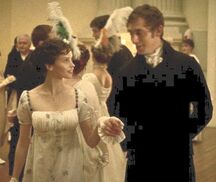
PictureThe whirl of Bath with Catherine Morland (Felicity Jones) and Henry Tilney (JJ Feild)
    In previous blog posts, I discussed a sub-genre of novel called the “season” novel. This genre was invented by Thomas Skinner Surr in his A Winter in London (1806), which was such a huge mega-hit with its thinly-disguised portraits of real aristocrats and London celebrities, that many imitators followed, such as A Summer at Weymouth (1808) and A Season at Harrowgate (1817). This post is about A Winter in Bath, by an anonymous author, but I didn’t read this 1807 novel because it’s a “season” novel. A Winter in Bath deserves attention for a few other reasons:
  • Adriana, the heroine, is troubled by the unwanted attentions of young Mr. Dawson, who is very much a John Thorpe (Northanger Abbey) type of character.
  • The publisher, Benjamin Crosby, threatened to sue another publisher who brought out a book called A Winter at Bath at the same time, a dispute which spilled over to the newspapers and the review columns.
  • A Winter in Bath is tied to the mystery over the authorship of The Woman of Colour, the unusual 1803 novel which features a “mulatto” heiress as its main character. More about that later.
  • There is an Emma-like reference which might be interesting to Janeites. Mrs. Elton, the daughter of a Bristol trader in Emma, boasts that she has “resources within herself” which enable her to live in obscurity in the small village of Highbury. In A Winter in Bath, we have a minor character, Mr. Oakley. He was a prosperous Bristol trader who retires and moves to live like a gentleman in the country. But he misses his old life because he’s not interested in hunting or field sports and intellectually, he is: “[d]estitute of resources, with no taste for any intellectual or refined amusement….”
  • This novel features a lesbian couple as minor characters. Have we got your attention now, modern academy?
    I've read almost one hundred novels of the long 18th century, I'd place this one higher on the list than many others... 


Read More
0 Comments

CMP#169  Emily the likeable heroine

1/18/2024

0 Comments

 
Picture
This blog explores social attitudes in Jane Austen's time, discusses her novels, reviews forgotten 18th century novels, and throws some occasional shade at the modern academy. ​The introductory post is here.  My "six simple questions for academics" post is here. ​

CMP#169     ​Emily Willis, or the History of a Natural Daughter (1756) by Anonymous
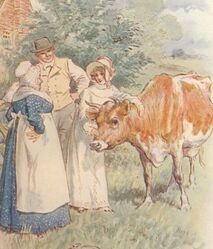
PictureMrs. Martin, Robert Martin, and Harriet, the "natural daughter" of somebody
     ​I’ve been looking at novels with characters, mostly girls, who were illegitimate, such as Emma’s Harriet Smith. Harriet is the “natural daughter” of a prosperous tradesman, but scholar Lisa Zunshine notes that in novels of this era, “the overwhelming majority of temporarily displaced children” such as foundlings, were not only from good families, but were not illegitimate after all. These heroes and heroines would be "raised by strangers, leave her adopted family upon reaching marriageable age, go through numerous ordeals (during which she acquired an eligible suitor while retaining her chastity), and finally discover her true kin, reassert her legitimate status, and reestablish herself as part of her biological family.” 
     This has been the case in many novels, some of which I’ve reviewed here, including: Anna, or Memoirs of a Welch Heiress (1785), Fanny or the Deserted Daughter (1792), Edward or various views of Human Nature (1798), Glenmore Abbey (1805), and There is a Secret, Find it Out! (1808). Therefore, I wanted to check out the novel titled Eliza Willis or History of a Natural Daughter to see if Eliza really was a natural daughter, or the misplaced daughter of an Earl, as these foundlings usually turn out to be. And yes, Emily Willis discovers who her parents are, and they are both from good families. But--shocker!-- they never got married. Mom gave birth in secret and went on to marry someone else.
     This novel then, presents as its heroine a girl from the wrong side of the blanket, who must contend with being treated as being sexually available on account of her low status, who nonetheless is rewarded with a wealthy baronet for her husband. It is another entry into the genre of novels which center around chastity and reputation.


Read More
0 Comments

CMP#168  "Clouds of Mystery"

1/10/2024

0 Comments

 
Picture
This blog explores social attitudes in Jane Austen's time, discusses her novels, reviews forgotten 18th century novels, and throws some occasional shade at the modern academy. ​The introductory post is here.  My "six simple questions for academics" post is here. ​

CMP#168  A Modern Incident in Domestic Life (1803) by Isabella Kelly
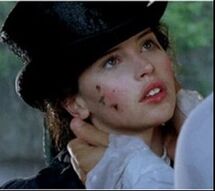
PictureFelicity Jones as Catherine Morland, engrossed in a mysterious gothic
      When I finished Volume One of A Modern Incident, I was half-way through the novel and I still had absolutely no idea what was going on. No idea. So far we just had:
    Page after page of characters stammering out incoherent remarks (dashes and dots in the original):
  • “Thy looks! –I feel them, --they will d---n me yet!”)
  • “I cannot pray! –I will not—no—Hell is but reprobation—that is mine already—or will be soon --- ---- ---- --- --- Yet, --but him [Mr. Winstanley, that is] I now hate—I know him,--he knows not me,---no, nor my deeds.—One effort yet, to cool this burning fever, to ease this secret torture, --this---this—Oh, Mortimore! –Mortimore!—Thee!—this—and if I fail! –be they blasted in all hope, --and I!—dark perdition cover me for ever—ever--!”
  • “Why Mrs. Courtney uttered such a frantic shriek, or what caused such violent emotion, the reader is left to imagine…”
    Page after page of characters harboring a secret:
  • “the secrets of another are not my own.”
  • "I have already told you... that I never mean to marry."
    And characters turning pale and rushing from the room:
  • "With these incoherent and inexplicable words, he rushed with frantic impetuousity from their presence.”
    Perhaps a gothic novel aficionado would be familiar with the tropes and plot devices that baffled me and would figure out the Big Secret before it was revealed in the penultimate chapter, but I only persisted with the book because it was a quick read; a two-volume novel which had not been reviewed when it came out.
    And holy snapping turtles, this had some lurid stuff; at least, lurid compared to the decorous voice of Jane Austen. This has several same-sex teases, and an incest tease, and a ghost-who-turns-out-to-be not a ghost, adultery and seduction, along with forged letters and other skullduggery. Get your smelling salts out for this one.


Read More
0 Comments

CMP#167  Ellen, the innocent heroine

1/4/2024

0 Comments

 
Picture
Clutching My Pearls is dedicated to countering post-modern interpretations of Jane Austen with research that examines her novels in their historical and literary context. I also read and review the forgotten novels of the Georgian and Regency era and compare and contrast them with Austen's. Click here for the first post in the series. Click here for my six critical questions for scholars.

CMP#167  Book Review: Glenmore Abbey, or the Lady of the Rock (1805) by Mrs. Isaacs
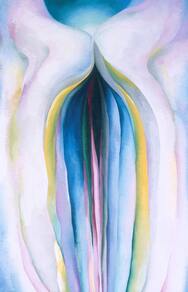
PictureFixated on one thing: "Grey Lines with Black, Blue and Yellow," Georgia O'Keefe, 1923
     Welcome to the New Year, a time for clean slates. Virgin and unspoiled, as it were. I didn't plan this, but it looks like January will be devoted to novels that obsess on the theme of Female Chastity and Female Reputation, or as they called it, "Fame." In all of January's novels, the big page-turning question is: can the heroine preserve her virtue and/or will the heroine be able to clear her name after her virtue has been impugned? Reading a succession of these novels really brings home the emphasis put on female virtue in the society of the time. And of course, not only the Georgian/Regency era but before and after, up to the sexual revolution of the 1960's. Some novels, like this one, take up the question of illegitimacy as well.
    In my study of 18th-century novels, I don’t usually read Gothic novels because (1) they currently receive plenty of attention in academic circles and (2) I’m studying Jane Austen in the context of the conventions and tropes of the sentimental novel, not the gothic. But Glenmore Abbey popped up in my search results twice for containing some phrases which Austen satirically used. Remember how Mrs. Elton kept boasting about her “resources,” which would keep her occupied and entertained in the small village of Highbury? The same term appears in Glenmore Abbey. And twice, characters are offered the “balm of consolation” poured into “wounded bosoms,” à la Mary Bennet in Pride and Prejudice. Finally, Glenmore Abbey never received a review when it was published, and I like giving attention to such long-ignored books.
      But I'm not going to denigrate Mrs. Isaacs for writing with trite clichés, although she certainly does at times: “To do justice to the ruined towers of Glenmore, the pen of ancient romance should delineate the thick clustering turrets, the broken columns, the fallen pillars, and mouldering battlements, that frowned over the gloomy domain. It was extensive and had once been well cultivated, but neglect had rendered it a barren waste, and the high trees, around many of which the climbing ivy had entwined itself, were merely a resort for the seafowl and birds of prey… (etc.)”
     Let’s be fair, she’s probably writing for money, and she’s writing to a specific formula, in emulation of the very successful Anne Radcliffe—in other words she is ticking the boxes with a tale that includes mystery, suspense, a touch of the supernatural, and moral lessons... 


Read More
0 Comments

    RSS Feed

    About the author:

    Greetings! I blog about my research into Jane Austen and her world, plus a few other interests. My earlier posts (prior to June 2017) are about my time as a teacher of ESL in China (just click on "China" in the menu below). More about me here. 


    Categories

    All
    18th Century Novel Tropes
    Authoresses
    Book Reviews
    Books Unreviewed Til Now
    China
    China: Sightseeing
    Clutching My Pearls
    Corvey Collection
    East & West Indies & Slavery
    Emma
    Humour
    Jane Austen
    Laowai At Large
    Mansfield Park
    Northanger Abbey
    Parody
    Persuasion
    Postmodern Pushback
    Pride And Prejudice
    Religion & Morality
    Sanditon
    Sense And Sensibility
    Shelley
    Teaching
    Woman Of Colour Mystery

    Archives

    March 2026
    December 2025
    November 2025
    October 2025
    September 2025
    July 2025
    June 2025
    May 2025
    April 2025
    March 2025
    October 2024
    September 2024
    August 2024
    July 2024
    June 2024
    May 2024
    April 2024
    March 2024
    February 2024
    January 2024
    December 2023
    November 2023
    October 2023
    September 2023
    August 2023
    July 2023
    May 2023
    April 2023
    March 2023
    February 2023
    January 2023
    December 2022
    October 2022
    August 2022
    July 2022
    June 2022
    May 2022
    April 2022
    March 2022
    February 2022
    January 2022
    December 2021
    November 2021
    October 2021
    September 2021
    August 2021
    July 2021
    June 2021
    May 2021
    April 2021
    March 2021
    February 2021
    January 2021
    December 2020
    November 2020
    October 2020
    December 2019
    November 2019
    January 2019
    January 2018
    October 2017
    June 2017
    May 2017
    January 2017
    January 2016
    December 2015
    November 2015
    October 2015
    September 2015


    RSS Feed

    © Lona Manning 2026
Proudly powered by Weebly