LONA MANNING
  • Home
  • Books
    • Shelley Novella
  • Research
    • Kitty Riddle
    • 18th C. love poetry
    • About Shelley
    • Peterloo
  • Jane Austen
  • Blog
  • About Me/Contact
    • Publications
    • Teaching Philosophy

CMP#264 Ta-dah!!! Meet Gertrude

9/9/2026

0 Comments

 
Picture

 This blog explores social attitudes in Jane Austen's time, discusses her novels, reviews forgotten 18th century novels, and throws some occasional shade at the modern academy. ​The introductory post is here.  My "six simple questions for academics" post is here. Spoilers abound in my discussion of these forgotten novels, and I discuss 18th-century attitudes which I do not necessarily endorse.
​

I am resuming my postings about the novel The Woman of Colour because I have some news...
​Click on the "Woman of Colour Mystery" menu item to the right for the other posts about this novel.

CMP#264   Meet the (possible) author of The Woman of Colour
Picture
    ​The scholarly reprint of The Woman of Colour came out eighteen years ago. It tells the story of a mixed-race heiress, Olivia Fairfield, who comes to England in obedience to her father's last will and testament, to marry her cousin Augustus, who is white. See here for a synopsis and a review of this novel that I wrote a few years ago.
      The question of who might have authored The Woman of Colour has added a strong fillip of interest to the reception of the text ever since. Lyndon J. Dominique, editor of the 2008 edition, said in his introduction that "weighing the facts that this text was probably written by a woman but not a British one--rather, one who had significant ties to the colonies as well as in-depth knowledge of British society--it seems most plausible to propose that a woman of color wrote
The Woman of Colour". That was an exciting possibility. A novel, written in 1808, by a racially aware mixed-race woman. As my grandmother would say, rarer than hen's teeth. When studying the voices of people of colour in this era, the pickings are slim. The autobiography of Olaudah Equiano, a freed slave, was a big bestseller in its time (1789). There is the History of Mary Prince (1833), an enslaved woman who made it to freedom in England and dictated her life story to English abolitionists. Dominique arranged to digitize a rare surviving copy of The Woman of Colour held in the British Library and bring it widespread academic and popular attention. But, is there any evidence for who wrote it? 


Read More
0 Comments

CMP#261  Book Review: On the Banks of the Wye

7/29/2026

0 Comments

 
Picture

 This blog explores social attitudes in Jane Austen's time, discusses her novels, reviews forgotten 18th century novels, and throws some occasional shade at the modern academy. ​The introductory post is here.  My "six simple questions for academics" post is here. Spoilers abound in my discussion of these forgotten novels, and I discuss 18th-century attitudes which I do not necessarily endorse. This post resumes an earlier thread about the mystery around the authorship of The Woman of Colour.

CMP#261   Book Review: The Banks of the Wye: or, Two Summers at Clifton (1808)​
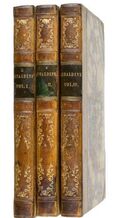
PictureThe British Library copy of this novel is bound in plain boards. Novels could be rebound in leather with more ornate spines.
​     The Banks of the Wye is one of 21 novels in the attribution chain involving the 1808 novel The Woman of Colour. This is a novel which has ben speculated about and commented on in academic circles because it was so unusual to have a mixed-race protagonist in a novel of this era.
     For more about the attribution chain (“by the author of”) and how it relates to the mystery of who wrote The Woman of Colour, click here. I was not able to read The Banks of the Wye when I was reading my way through the other novels earlier this year, because it is not digitized. Last month, however, I visited England and spent several mornings reading it in one of the peaceful and sedate Reading Rooms of the British Library.
      Now that I’ve read every book in the attribution chain but one (Fedaretta), I would nominate The Banks of the Wye as the best-written of the 21 novels, with The House That Jack Built as a close second. The anonymous authoress sustains her story through four volumes. She sets up her major plot points with skilful foreshadowing, telling us the story of a young bride named Teresa who went astray, and then reiterating her doom in the life of her granddaughter. She handles a lot of characters and sub-plots and keeps them all in motion. It was a frequent fault of novelists of this time to introduce a gallery of crazy characters just for the sake of having crazy characters—such as, an assortment of people at a vacation resort. The Banks of the Wye’s comic characters are not there just to be ridiculous; they play some part in the plot. My favourite is Miss Patience Perkyns, a woman on the wrong side of thirty who haunts vacation spots in search of a husband and makes a lot of noise about her maiden virtue. 


Read More
0 Comments

CMP#259  Book Review, Maids As They Are Not

7/15/2026

0 Comments

 
Picture

 This blog explores social attitudes in Jane Austen's time, discusses her novels, reviews forgotten 18th century novels, and throws some occasional shade at the modern academy. ​The introductory post is here.  My "six simple questions for academics" post is here. Spoilers abound in my discussion of these forgotten novels, and I discuss 18th-century attitudes which I do not necessarily endorse.

​
​“Mrs. Wilmington saw the state of her mind with pity, yet she made no remarks on it, hoping that time with lenient hand would yet pour the balm of consolation into her wounded and care-worn heart.”

CMP#259  Maids As They Are Not and Wives As They Are (1803) by Mrs. Martha Homely
     The pseudonymous authoress Mrs. Martha Homely knew that the first unrelentingly weepy and overwrought volume of Maids As They Are is notably different from the livelier scandal-ridden subsequent volumes, and in her foreword she “entreats those who are fatigued at the melancholy of her first volume” to hang in there. Volume Two introduces Lady Lucy and her two sisters, more wickedly captivating than her heroine. Of course they are only there to be held up as a bad example. Of course!
    The story centers around our beautiful and virtuous heroine Theodora Cameron. Actually, the first chapter traces the family line back to the time of good Queen Anne, but the family tree collapses as the authoress dispatches Theodora’s aunt, then her uncle the baronet, then Theodora’s mother, then her father. We’re left with Theodora and her cousin Evelin Cameron, the only remaining male heir to the baronetcy. They are in fact double first cousins, because their fathers are twin brothers (the one who popped out first was the baronet) who married sisters. Their parents intended them for each other from their cradles. No genetic counselors in this little Welsh village, evidently...

Read More
0 Comments

CMP#251    Subversive Lovers' Vows

5/12/2026

0 Comments

 
Picture

 This blog explores social attitudes in Jane Austen's time, discusses her novels, reviews forgotten 18th century novels, and throws some occasional shade at the modern academy. ​The introductory post is here.  My "six simple questions for academics" post is here. Spoilers abound in my discussion of these forgotten novels, and I discuss 18th-century attitudes which I do not necessarily endorse.

CMP#251    ​“The vicious tendency of the German drama”
​“In discussing the use made of [Kotzebue’s play] Lovers’ Vows in Mansfield Park (1814), modern commentators sometimes underrate how notorious it was, how critics and satirists from The Anti-Jacobin on had made it a byword for moral and social subversion.”                              --Marilyn Butler

PictureThe Menace across the Channel
   I first learned about the anti-Jacobins and the culture war that raged between supporters of the French Revolution versus the conservative old guard in Marilyn Butler’s important book, Jane Austen and the War of Ideas (1975). 
  Jacobins were one of the revolutionary groups that turned France upside down during the Reign of Terror which followed the overthrow of the monarchy. The British establishment and of course, many ordinary patriotic Britons, were worried about revolutionary fervor spreading across the Channel. While progressives such as Tom Paine hailed the reform (or overthrow) of organized religion, primogeniture, and the aristocracy, conservative-minded folk also picked up their quill pens to defend the status quo. Some founded The Anti-Jacobin Review to warn about the dangers of political radicalism. This included castigating French philosophers like Rousseau and Voltaire, and German writers like Goethe and Kotzbue. Once you delve into the back and forth, there is a shock of recognition--it’s comparable to the cultural and political wars raging today.
    Conservatives (and I am using the word as a descriptor, not a slur) saw not only a political threat but a threat to established social customs. They particularly feared any liberalization of divorce laws or any whiff of what today we would call feminism. Some authors used satire and ridicule  to combat progressive ideas, notably Elizabeth Hamilton in her Memoirs of Modern Philosophers (1800). In the example below, the author of Scenes of Life used the direct attack to condemn the new radicalism and progressivism. 


Read More
0 Comments
<<Previous

    RSS Feed

    About the author:

    Greetings! I blog about my research into Jane Austen and her world, plus a few other interests. My earlier posts (prior to June 2017) are about my time as a teacher of ESL in China (just click on "China" in the menu below). More about me here. 


    Categories

    All
    18th Century Novel Tropes
    Authoresses
    Book Reviews
    Books Unreviewed Til Now
    China
    China: Sightseeing
    Clutching My Pearls
    Corvey Collection
    East & West Indies & Slavery
    Emma
    Humour
    Jacobin & Anti Jacobin
    Jane Austen
    Laowai At Large
    Mansfield Park
    Northanger Abbey
    Parody
    Persuasion
    Postmodern Pushback
    Pride And Prejudice
    Religion & Morality
    Sanditon
    Sense And Sensibility
    Shelley
    Teaching
    Woman Of Colour Mystery

    Archives

    August 2026
    July 2026
    June 2026
    May 2026
    April 2026
    March 2026
    December 2025
    November 2025
    October 2025
    September 2025
    July 2025
    June 2025
    May 2025
    April 2025
    March 2025
    October 2024
    September 2024
    August 2024
    July 2024
    June 2024
    May 2024
    April 2024
    March 2024
    February 2024
    January 2024
    December 2023
    November 2023
    October 2023
    September 2023
    August 2023
    July 2023
    May 2023
    April 2023
    March 2023
    February 2023
    January 2023
    December 2022
    October 2022
    August 2022
    July 2022
    June 2022
    May 2022
    April 2022
    March 2022
    February 2022
    January 2022
    December 2021
    November 2021
    October 2021
    September 2021
    August 2021
    July 2021
    June 2021
    May 2021
    April 2021
    March 2021
    February 2021
    January 2021
    December 2020
    November 2020
    October 2020
    December 2019
    November 2019
    January 2019
    January 2018
    October 2017
    June 2017
    May 2017
    January 2017
    January 2016
    December 2015
    November 2015
    October 2015
    September 2015


    RSS Feed

    © Lona Manning 2026
Proudly powered by Weebly