LONA MANNING
  • Home
  • Books
    • Shelley Novella
  • Research
    • Kitty Riddle
    • 18th C. love poetry
    • About Shelley
    • Peterloo
  • Jane Austen
  • Blog
  • About Me/Contact
    • Publications
    • Teaching Philosophy

CMP #51  The Vortex of Dissipation!

6/7/2021

0 Comments

 
Picture
This is the second in my series about women writers of Austen's time.
​ Click on the "Authoresses" category on the right for more.
 Elizabeth Helme (1753?-1814?) wrote several best-sellers. 

This discussion of Helme's novel Modern Times contains spoilers.

18th century Women Writers, Vortex of Dissipation Edition
“Devereux Forester’s being ruined by his Vanity is extremely good; but I wish you would not let him plunge into a ‘vortex of Dissipation’.  I do not object to the Thing, but I cannot bear the expression;–it is such thorough novel slang–and so old, that I dare say Adam met with it in the first novel he opened."
              -- Jane Austen, giving advice to her niece about novel-writing, September 28, 1814
​   Maybe Jane Austen had Elizabeth Helme’s Modern Times: or, The Age We Live In, in mind when she gave her writing advice to her niece.  Modern Times was published in April of 1814 and contained four "vortexes," including two "vortexes of dissipation."
    If Austen had read Helme's book, she might have wondered, in her turn, if Helme had read Sense & Sensibility; 
Modern Times features a family named Willoughby and the main character is a Colonel Brandon type. Sir Charles Neville wasn’t allowed to marry the girl he loved so he joined the army and went abroad for many years. Plus there are two sisters and the older one is virtuous and sensible while the younger one isn't. But otherwise Modern Times, and Helme, are very different from Austen.
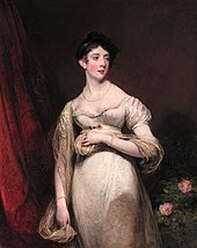
​  ​ Modern Times is dedicated by permission to the Countess Cowper. Emily Lamb, Countess Cowper, was at the very top of the social and political tree, a patron of Almack’s, and later the wife of a prime minister. Her mother was notorious for her many love affairs and Countess Cowper herself had a long-standing relationship with Lord Palmerston, whom she married after Lord Cowper died. 
Picture
Emily, Countess Cowper
​(1787–1869) by William Owen
     I only mention this because Countess Cowper had no objection to giving her blessing to a book which portrayed the nobility as decadent, selfish, immoral, people. The idea that it was daring or revolutionary in Austen’s time to attack the extravagance and corruption of the titled classes is just not accurate. Decrying the excesses of the rich and privileged was an extremely common topic for a novel, almost expected, one might say. Novels were expected to convey a moral lesson and the nobility were an easy target. (For more spendthrift, stupid nobles, check out Maria Edgeworth's Belinda or her Castle Rackrent.) Readers of the day loved to tsk-tsk over the rakish young viscount who loses everything at the gaming table, or Lady So-and-So who bankrupts herself giving lavish entertainments to vie with another society hostess. These characters populate the pages of Modern Times. Helme moralizes over them but she provides the salacious details as well. Apart from Sir Charles, the virtuous people in Modern Times are all from the middling classes.
Read More
0 Comments

CMP#50 Putting Them Out in the World

6/1/2021

0 Comments

 
Picture

This blog post features a lesser-known (today that is) author of Austen's time, the prolific Barbara Hofland, who wrote many tales emphasizing Christian morality. 

​“It is amazing,” said [Mrs. Norris], “how much young people cost their friends, what with bringing them up and putting them out in the world! They little think how much it comes to, or what their parents, or their uncles and aunts, pay for them in the course of the year. Now, here are my sister Price's children; take them all together, I dare say nobody would believe what a sum they cost Sir Thomas every year, to say nothing of what I do for them.”                                                                                      --  Mansfield Park

Putting Them Out in the World: Choosing a Career for your Children in Regency Times
Picture
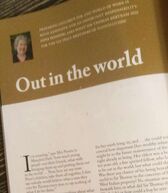
​   My article about considerations around the choice of career in Regency times is in the current issue of Jane Austen’s Regency World magazine. Because finding the right profession is such a broad topic, I limited the scope of the article to a discussion about Fanny Price’s six brothers, who were started in their professions thanks to the generosity of their uncle Sir Thomas Bertram.
   Helping young people get a start in life was referred to as “putting them out in the world.” Generous patrons would sometimes help promising young people, even if they weren’t related. Darcy’s father is very generous to Mr. Wickham, the son of his steward, though of course Wickham throws it all away. In Coelebs in Search of a Wife, the young hero is impressed and touched when he sees his future bride shows charitable kindness to Dame Alice, an old pensioner in the village. Dame Alice is cared for by a little granddaughter, and the question is, what will become of her after the old woman dies? “I ventured, with as much diffidence as if I had been soliciting a pension for myself, to entreat that I might be permitted to undertake the putting forward Dame Alice's little girl in the world, as soon as she should be released from her attendance on her grandmother.” The hero is offering, in other words, to find employment for her. Probably he will pay for her apprenticeship in some trade. And yes, he's doing it to impress the girl he's courting, but still, it's nice of him to help a little village girl in a world with no public schools and limited resources.


Read More
0 Comments
Forward>>

    RSS Feed

    About the author:

    Greetings! I blog about my research into Jane Austen and her world, plus a few other interests. My earlier posts (prior to June 2017) are about my time as a teacher of ESL in China (just click on "China" in the menu below). More about me here. 


    Categories

    All
    18th Century Novel Tropes
    Authoresses
    Book Reviews
    Books Unreviewed Til Now
    China
    China: Sightseeing
    Clutching My Pearls
    Corvey Collection
    East & West Indies & Slavery
    Emma
    Humour
    Jane Austen
    Laowai At Large
    Mansfield Park
    Northanger Abbey
    Parody
    Persuasion
    Postmodern Pushback
    Pride And Prejudice
    Religion & Morality
    Sanditon
    Sense And Sensibility
    Shelley
    Teaching
    Woman Of Colour Mystery

    Archives

    March 2026
    December 2025
    November 2025
    October 2025
    September 2025
    July 2025
    June 2025
    May 2025
    April 2025
    March 2025
    October 2024
    September 2024
    August 2024
    July 2024
    June 2024
    May 2024
    April 2024
    March 2024
    February 2024
    January 2024
    December 2023
    November 2023
    October 2023
    September 2023
    August 2023
    July 2023
    May 2023
    April 2023
    March 2023
    February 2023
    January 2023
    December 2022
    October 2022
    August 2022
    July 2022
    June 2022
    May 2022
    April 2022
    March 2022
    February 2022
    January 2022
    December 2021
    November 2021
    October 2021
    September 2021
    August 2021
    July 2021
    June 2021
    May 2021
    April 2021
    March 2021
    February 2021
    January 2021
    December 2020
    November 2020
    October 2020
    December 2019
    November 2019
    January 2019
    January 2018
    October 2017
    June 2017
    May 2017
    January 2017
    January 2016
    December 2015
    November 2015
    October 2015
    September 2015


    RSS Feed

    © Lona Manning 2026
Proudly powered by Weebly